 Obbro Japan Co.,Ltd.
KK Bldg. 6F 1-4-11 Higashi Kanda, Chiyoda-ku,
Tokyo,101-0031 Japan
TEL +81-3-3864-5570, FAX +81-3-5821-7559
- English | - Japanese
Tokyo,101-0031 Japan
TEL +81-3-3864-5570, FAX +81-3-5821-7559
- English | - Japanese
Activated carbon typically removes impurities present in gases by adsorbing them onto the inner surface of its pores through intermolecular forces (van der Waals forces).
However, there are some impurities, such as hydrogen sulfide and ammonia, that cannot be adsorbed.
To adsorb these gases, impregnated activated carbon, which has chemical substances added to the activated carbon, is used.
However, there are some impurities, such as hydrogen sulfide and ammonia, that cannot be adsorbed.
To adsorb these gases, impregnated activated carbon, which has chemical substances added to the activated carbon, is used.
1. Crushed activated carbon
| • | CGF-A 4x8 (coconut shell raw material) |
| Impregnated activated carbon for acidic gases |
=== Activated carbon analysis values ===
(The testing method conforms to JIS K-1474, the standard test method for activated carbon.)
(The testing method conforms to JIS K-1474, the standard test method for activated carbon.)
| unit | Standard value | |
| Loss on drying | % | 5 or less |
| Bulk density (packing density) |
g/ml | 0.4 - 0.6 |
| Hydrogen sulfide adsorption amount | % | 24 or more |
| pH | 9 or more | |
| Particle size: 4x8 mesh | % | 95 or more |
| Hardness | % | 95 or more |
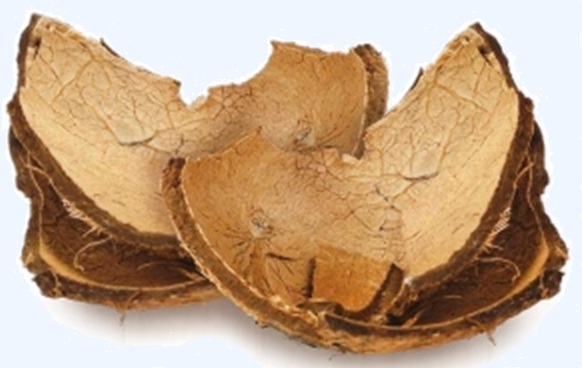
The packaging can be changed according to customer requests.
| • | CGF-B 4x8 (coconut shell raw material) |
| Impregnated activated carbon for basic gases |
=== Activated carbon analysis values ===
(The testing method conforms to JIS K-1474, the standard test method for activated carbon.)
(The testing method conforms to JIS K-1474, the standard test method for activated carbon.)
| unit | Standard value | |
| Loss on drying | % | 40 or less |
| Bulk density (packing density) |
g/ml | 0.4 - 0.6 |
| Ammonia adsorption amount | % | 7 or more |
| pH | 2 or more | |
| Particle size: 4x8 mesh | % | 95 or more |
| Hardness | % | 95 or more |
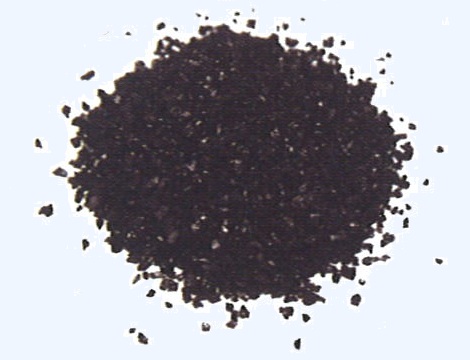
The packaging can be changed according to customer requests.
| • | CGF-N 4x8 (coconut shell raw material) |
| Impregnated activated carbon for neutral gases |
=== Activated carbon analysis values ===
(The testing method conforms to JIS K-1474, the standard test method for activated carbon.)
(The testing method conforms to JIS K-1474, the standard test method for activated carbon.)
| unit | Standard value | |
| Loss on drying | % | 10 or less |
| Bulk density (packing density) |
g/ml | 0.4 - 0.6 |
| Methyl sulfide adsorption capacity | % | 3.5 or more |
| pH | 4 or more | |
| Particle size: 4x8 mesh | % | 95 or more |
| Hardness | % | 95 or more |
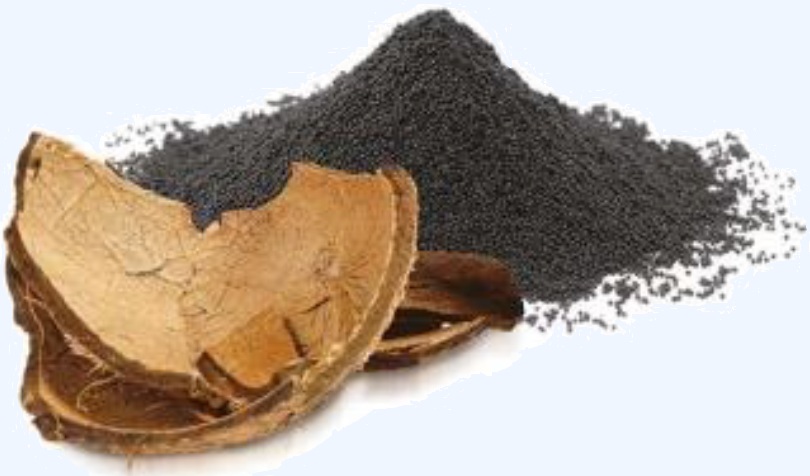
The packaging can be changed according to customer requests.
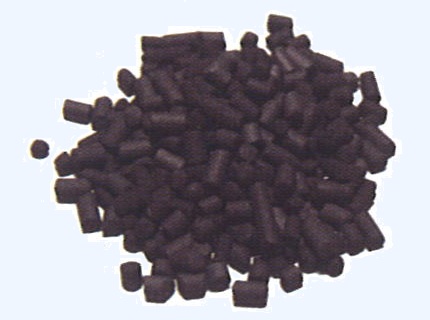
2. Pellet activated carbon
| • | GPS 4x6 pellets |
| Impregnated activated carbon for acidic gases |
=== Activated carbon analysis values ===
(The testing method conforms to JIS K-1474, the standard test method for activated carbon.)
(The testing method conforms to JIS K-1474, the standard test method for activated carbon.)
| unit | Standard value | |
| Loss on drying | % | 15 or less |
| Bulk density (packing density) |
g/ml | 0.4 - 0.6 |
| Hydrogen sulfide adsorption amount | % | 24 or more |
| Pressure loss | mmAq/m | 150 or less |
| pH | 7 or more | |
| Particle size: 4 - 6 mesh (3.35 - 4.75) |
% | 95 or more |
| Hardness | % | 95 or more |
The packaging can be changed according to customer requests.
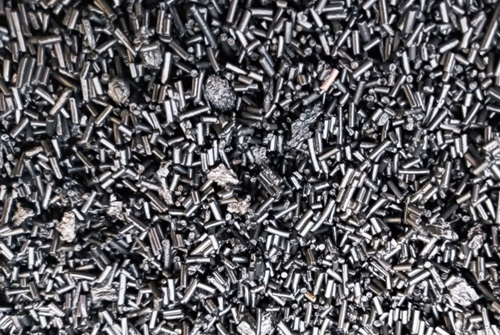
| • | GPAL 4x6 pellets |
| Impregnated activated carbon for basic gases |
=== Activated carbon analysis values ===
(The testing method conforms to JIS K-1474, the standard test method for activated carbon.)
(The testing method conforms to JIS K-1474, the standard test method for activated carbon.)
| unit | Standard value | |
| Loss on drying | % | 20 or less |
| Bulk density (packing density) |
g/l | 0.4 - 0.6 |
| Ammonia adsorption amount | mg/g | 7 or more |
| Pressure loss | mmAq/m | 150 or less |
| pH | 4 or less | |
| Particle size: 4 - 6 mesh (3.35 - 4.75) |
% | 95 or more |
| Hardness | % | 95 or more |
The packaging can be changed according to customer requests.
| • | GPN 4x8 pellets |
| Impregnated activated carbon for neutral gases |
=== Activated carbon analysis values ===
(The testing method conforms to JIS K-1474, the standard test method for activated carbon.)
(The testing method conforms to JIS K-1474, the standard test method for activated carbon.)
| unit | Standard value | |
| Loss on drying | % | 20 or less |
| Bulk density (packing density) |
g/ml | 0.4 - 0.6 |
| Methyl sulfide adsorption capacity | % | 4 or more |
| Pressure loss | mmAq/m | 150 or less |
| pH | 4 or less | |
| Particle size: 4 - 6 mesh (3.35 - 4.75) |
% | 95 or more |
| Hardness | % | 95 or more |
The packaging can be changed according to customer requests.
| HOME
| Product Information
- Granular activated carbon (coconut shell raw material)
- Granular activated carbon (coal raw material)
- Powdered activated carbon
- Special charcoal (impregnated charcoal)
| Technical information | Company information | Contact | Handling of personal information
| Product Information
- Granular activated carbon (coconut shell raw material)
- Granular activated carbon (coal raw material)
- Powdered activated carbon
- Special charcoal (impregnated charcoal)
| Technical information | Company information | Contact | Handling of personal information